Visual Elements Driving Higher Engagement in Live Dealer Mobile Gambling Experiences
Written by Yves Simon · Nov 9, 2026

Visual Elements Driving Higher Engagement in Live Dealer Mobile Gambling Experiences
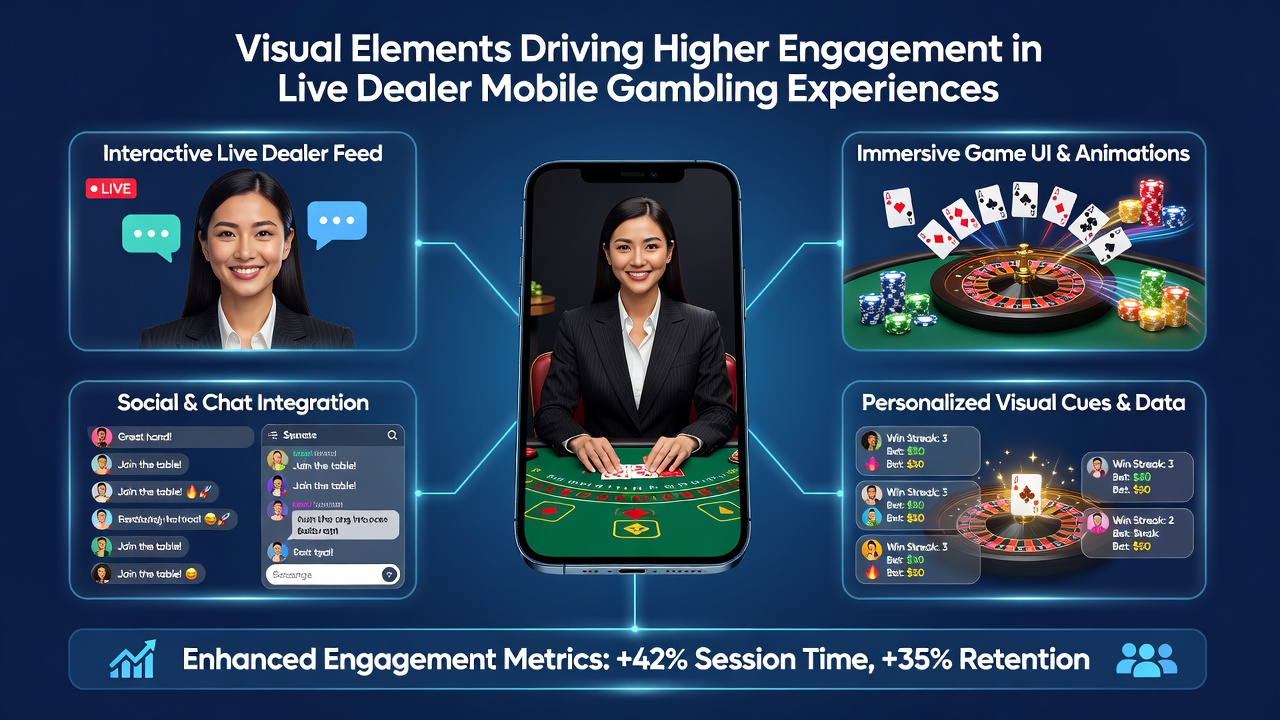
Live dealer experiences on mobile devices rely on carefully calibrated visual components that shape how participants interact with real-time tables, and these elements have evolved considerably by November 2026. High-resolution video streams form the foundation, with platforms delivering consistent 1080p or higher feeds that reduce visual lag during peak hours, while researchers tracking session durations note longer average play periods when clarity remains stable across network shifts.
Streaming Resolution and Frame Rate Standards
Operators prioritize adaptive bitrate technology that maintains smooth playback even on variable mobile connections, and data from industry monitoring services indicate that sessions using automatic quality scaling retain more users compared with fixed-resolution alternatives. Multiple camera angles allow players to switch between wide table views, close-ups of card handling, and overhead shots of chip placements, creating a layered visual narrative that mirrors physical casino environments without requiring additional hardware.
Interface Layout and Touch-Responsive Design
Mobile interfaces incorporate translucent overlays for betting controls that appear only when needed, preserving screen real estate for the dealer feed itself, while gesture-based zooming lets users enlarge specific areas of the table during critical moments. Color palettes often lean toward deep greens and warm neutrals that echo traditional felt surfaces, and studies on visual processing in gaming contexts show these choices correlate with sustained attention spans during extended sessions.
Real-Time Visual Feedback Mechanisms
Animations for card reveals, chip movements, and win notifications operate at precise timings that align with dealer actions, reducing cognitive disconnect between what players see on screen and what occurs at the physical table. These micro-animations employ subtle particle effects or highlight glows rather than abrupt transitions, and platform analytics reveal higher repeat engagement when such cues remain understated yet immediate. Touch targets expand dynamically during betting windows, accompanied by visual confirmation pulses that signal successful wagers without interrupting the live stream.
Multi-View Synchronization and Player Perspective
Systems that synchronize secondary camera feeds with primary dealer video enable seamless perspective shifts, allowing users to inspect dice rolls or roulette wheel spins from angles that physical spectators might request in a land-based setting. According to reports compiled by the European Gaming and Betting Association, synchronized visual layers contribute to measurable increases in table retention rates across European markets. Observers note that when players can toggle between dealer close-ups and environment-wide shots without perceptible delay, interaction frequency with chat functions and side bets tends to rise.
Lighting, Depth, and Environmental Cues
Lighting design within the studio setup emphasizes natural skin tones and reflective surfaces on cards and chips, while background elements remain softly blurred to direct focus toward the action. Depth-of-field adjustments in the video pipeline help simulate three-dimensional space on flat screens, and mobile-specific rendering pipelines adjust contrast automatically based on ambient light sensors. Figures released through regulatory oversight in multiple jurisdictions demonstrate that environments with consistent visual hierarchy experience fewer mid-session drop-offs during evening hours.
Overlay Elements and Information Density
Information overlays display player balances, active bets, and recent outcomes in compact, icon-driven formats that avoid crowding the central video window, and these elements update through smooth transitions rather than instant replacements. Platforms that tested denser text layouts reported lower satisfaction scores in user panels, prompting a shift toward iconography supplemented by expandable detail panels. Visual indicators for dealer actions, such as highlighted betting zones or animated timers, provide temporal context that keeps mobile users oriented during rapid game rounds.
Conclusion
Visual components in live dealer mobile environments continue to advance through iterative refinements in resolution, camera control, animation timing, and interface responsiveness. As platforms integrate sensor-driven adaptations and refined multi-angle feeds, engagement metrics tracked across regulated markets reflect steady gains tied directly to these visual refinements. Continued monitoring by oversight bodies and industry groups will determine how further developments in display technology shape future interaction patterns.