Currency Swings and Their Role in Shaping Real-Time Bonus Adjustments for Global Bettors
Written by Yves Simon · Sep 14, 2026
Currency Swings and Their Role in Shaping Real-Time Bonus Adjustments for Global Bettors
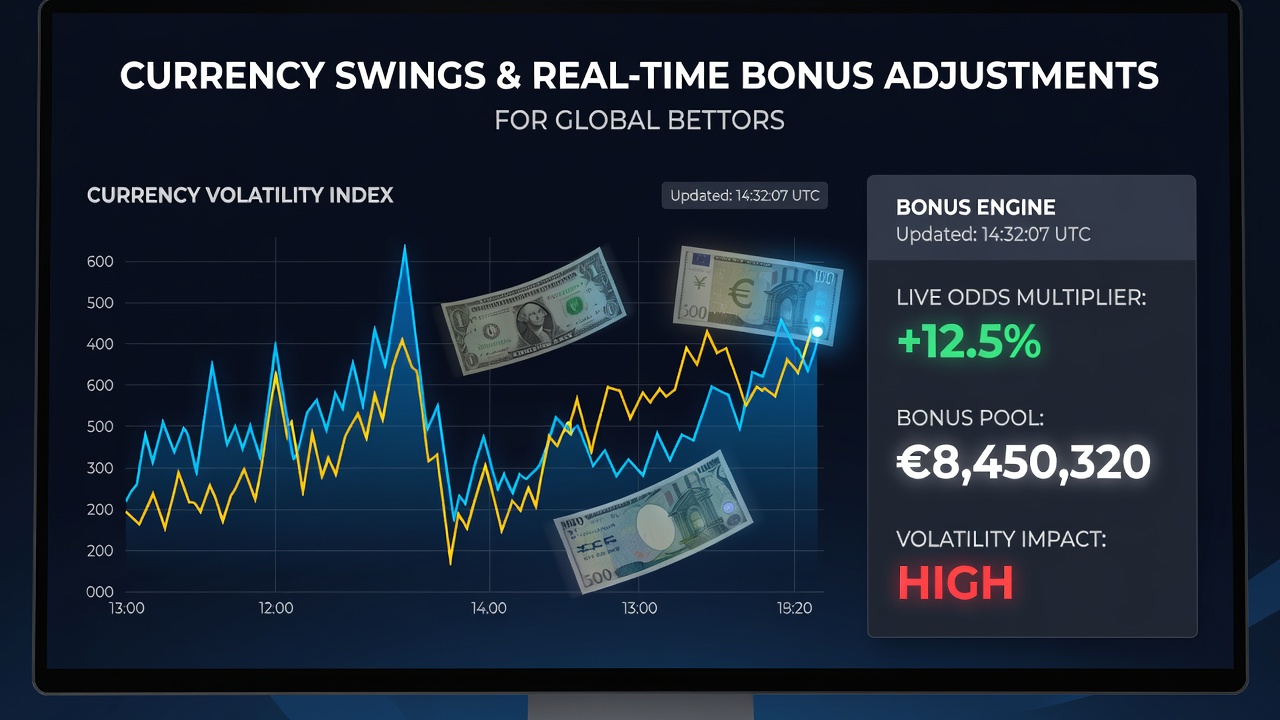
Global betting platforms track exchange rate movements closely because even modest swings in major currency pairs can alter the real value of deposited funds and attached bonuses within minutes. Operators maintain internal systems that pull live forex feeds and recalculate promotional offers so that a bonus credited in one currency retains equivalent purchasing power when converted for users in other regions. Data from the European Central Bank shows average daily volatility in EUR/USD and GBP/USD pairs reached 0.8 percent during the first half of 2026, enough to shift bonus tiers for thousands of accounts each trading session.
How Platforms Monitor and Respond to Rate Changes
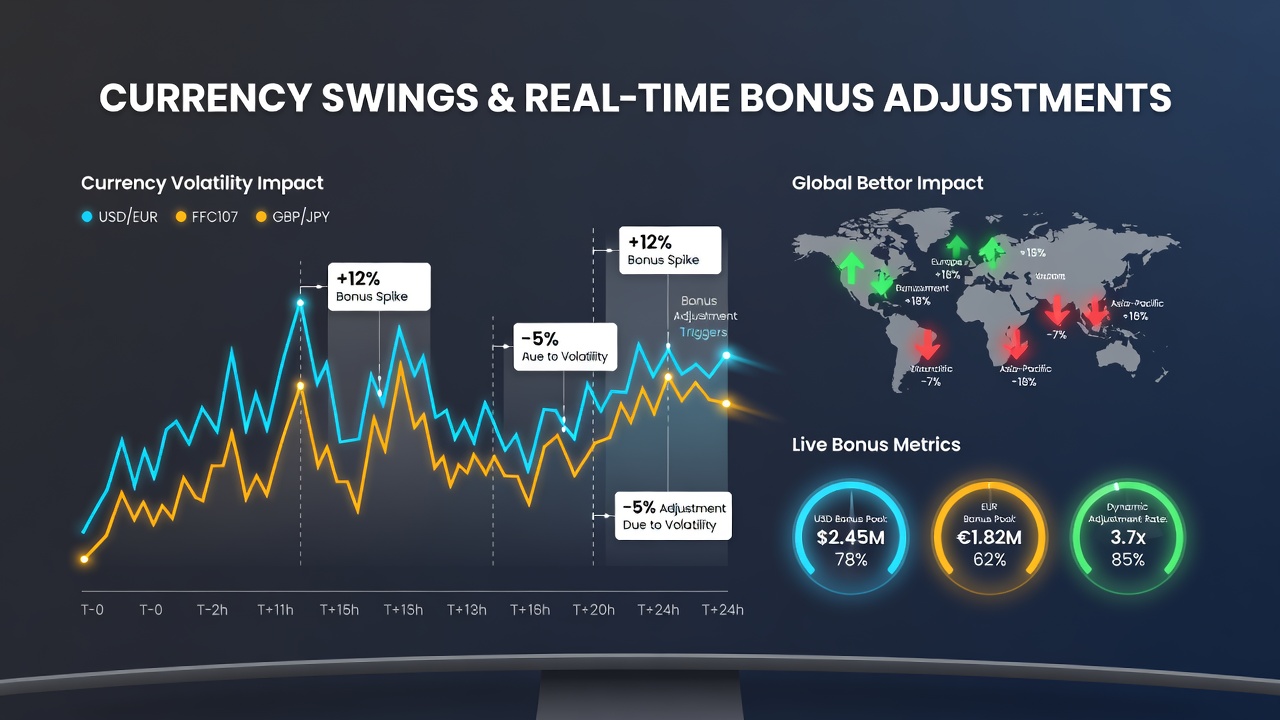
Automated modules sit between the sportsbook ledger and external currency data providers, pulling updates every thirty seconds during peak trading hours. When a threshold breach occurs, such as a 1.5 percent move against the platform's base currency, the system flags active bonuses and applies an adjustment multiplier before the next settlement cycle. Observers note that these triggers often coincide with scheduled economic releases, and firms schedule extra monitoring staff around those windows to handle manual overrides when automated rules produce edge cases.
Take one European operator that expanded into Latin American markets in late 2025. Its bonus engine now references both the ECB reference rate and the Central Bank of Brazil's daily fix, allowing simultaneous adjustments for euro-denominated welcome offers and Brazilian real cashback programs. In September 2026 the Brazilian real depreciated 4.2 percent against the euro over a single week, prompting the platform to increase real-denominated bonus percentages by the same margin for affected users so that promotional value stayed consistent.
Effects on Bettor Behavior and Platform Economics
Players who hold accounts in multiple currencies sometimes shift deposits toward the stronger unit when volatility spikes, a pattern visible in transaction logs from several multi-license operators. Researchers at a Canadian university examined three months of anonymized data and found that users receiving real-time bonus uplifts after favorable rate moves placed 11 percent more wagers in the following forty-eight hours compared with periods of stable rates. Platforms therefore treat these adjustments not only as customer-service tools but also as instruments that can stabilize or increase handle during turbulent forex sessions.
Yet the same data set revealed that rapid downward adjustments occasionally prompted users to pause activity until rates stabilized, particularly among those whose local currency had weakened. Operators respond by publishing transparent adjustment policies and by offering grace periods during which existing bonuses lock at the rate recorded at the moment of deposit. Such policies appear in licensing filings submitted to the Malta Gaming Authority and the Australian Transaction Reports and Analysis Centre, both of which require clear disclosure of dynamic promotional mechanics.
Technical Infrastructure and Data Sources
Most large platforms rely on a combination of proprietary forex APIs and feeds from tier-one banks rather than public sources alone. The architecture typically includes a reconciliation layer that cross-checks the internal ledger against two independent rate providers before any bonus recalculation executes. When discrepancies exceed a predefined tolerance, the system holds the adjustment in a review queue until compliance staff approve the change. This process adds latency measured in seconds rather than minutes, yet it prevents erroneous payouts that could erode operator margins or trigger regulatory scrutiny.
Industry reports from the European Gaming and Betting Association indicate that roughly 60 percent of operators with global user bases now deploy at least one dedicated currency-risk module, up from 35 percent in 2023. The increase tracks rising participation from users in emerging markets where local currencies exhibit higher volatility against the USD and EUR benchmarks that most platforms use for internal accounting.
Regulatory Considerations Across Jurisdictions
Regulators in different regions approach these adjustments with varying levels of prescription. Canadian provincial authorities require operators to maintain audit trails that demonstrate bonus values remain within advertised ranges after currency corrections. In Australia, the focus rests on consumer protection disclosures that explain how rate changes may increase or decrease promotional amounts. Firms that operate across both markets maintain separate rule sets within the same backend system, toggling the appropriate logic based on the user's registered jurisdiction.
September 2026 brought additional attention when the Reserve Bank of Australia published updated guidance on digital payment disclosures. The document explicitly references dynamic bonus calculations tied to exchange rates, requiring operators to notify users within one hour of any material adjustment. Platforms responded by embedding in-app alerts that display both the old and new bonus figures alongside the triggering exchange rate.
Conclusion
Currency volatility continues to shape the way global betting platforms structure and deliver real-time bonuses. The combination of live data feeds, threshold-based triggers, and jurisdiction-specific compliance rules produces an environment where bonus values fluctuate alongside major exchange rates. Observers tracking transaction volumes note that transparent adjustment policies correlate with steadier user engagement across multiple currency zones. As forex markets remain active and new licensing regimes emerge, the technical and regulatory frameworks governing these calculations will likely grow more refined, yet the core mechanism of linking bonus values to live currency data appears set to remain a standard feature of international betting operations.